
I Had an AI Obsession

I started using ChatGPT in December 2022, about a month after it was released to the public. I immediately loved it.
I primarily used early ChatGPT for humor. I generated Dr. Seuss poems about looksmaxxing. I generated Trump speeches espousing Maoism. I deliberately tried to get ChatGPT to break its own taboos on sexual content and slurs, and I succeeded. Looking back, the whole system was so quaint. This was the era of glitchy Will Smith eating spaghetti.
Then I moved on. There was only so much I could ask to early ChatGPT.
And then I forgot about AI. The next two years of 2023 and 2024 were full of personal and cultural distractions. I graduated college. I started working full-time. I moved into my first apartment. I started this Substack, and I made leaps forward in my journey as an independent filmmaker. In the cultural sphere, I was preoccupied with Barbenheimer, Brat Summer, a blood-smeared Trump’s raised fist, Luigi Mangione’s killing of Brian Thompson, and a parade of meaningless Twitter spats. AI was just not on the radar. The great deepfake crisis that was predicted to obscure all notions of truth and falsity in the 2024 presidential campaign simply never came, at least not on any mass scale. Of course, usage of AI increased substantially during these two years (perhaps not for myself, but certainly for other people), though there was no moment that gave me pause.
But this year, 2025, has been different. ChatGPT improved substantially. New AI programs surged in popularity. A shift began to penetrate my personal circles, moment by moment:
I went to a restaurant and noticed AI-generated decor spanning the walls, complete with fake text and fake graphs.
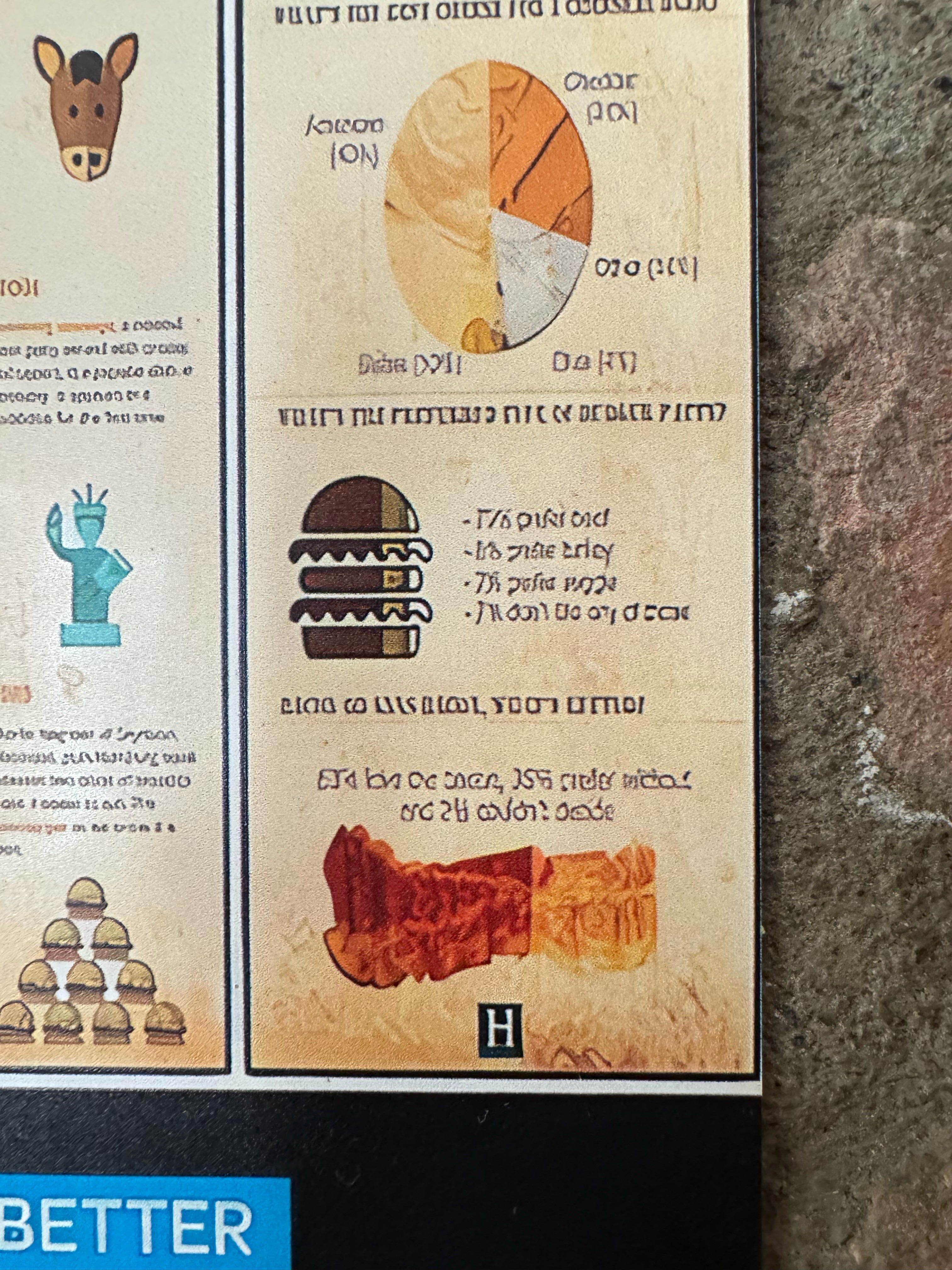
I asked some friends about how to acquire economics and finance knowledge; they encouraged me to have ChatGPT create a personalized lesson plan and accompanying schedule. They said it would be better than anything they could produce. They were right.
Another friend showed me an AI-altered image of her now-deceased dog, in which she prompted ChatGPT to put him in a mouse costume. The AI image was so cute that she cried. She considered it cuter than the original image.
I started noticing people in every walk of life searching basic questions on ChatGPT instead of Google.
I was listening to a song called What U Need on Spotify, having heard it first as the background music on a few artsy TikTok collages. I later learned that the singers were AI Playboi Carti and AI The Weeknd.
Then, on May 20th, Google released Veo 3. It produces fully realistic videos with accompanying sound. For the first time, I could not tell that the videos were fake, nor could any of my peers. A friend sent me a video, fully believing that it was real. It showed a kangaroo service animal being denied access to a plane, holding a boarding pass with a blank stare. This friend was Gen Z, not a Boomer.
For about a month while I was between jobs (and thus my mind was given free time and free reign to cannibalize itself), I developed an intense obsession with AI, spurred by its encroachments into my life.
I experienced “AI Doomerism,” as coined by writer Freddie deBoer.
I watched scores of YouTube videos and TikToks warning of the inevitable collapse of the entertainment and marketing industries (a direct threat to my career), as well as the inevitable superintelligence war between the U.S. and China two years from now (see: AI 2027).
I’m not particularly afraid of government conflict with China. But I am afraid of the intrusive security apparatus such a cold war - or worse, a hot war - would bring.
I am afraid of myself and the ones I love becoming the chair-dwellers from WALL-E.
I am afraid of my brain being unable to distinguish between life as it actually happens and life as a cloying AI interprets it for me.
I am afraid of loving fantasies over reality - of preferring my exaggerated AI mouse costume dog to my real dog.
I am afraid of everything I do lacking importance.
I am not expecting Armageddon. I am expecting a slow decline into a meaningless, trivial, narcissistic, helpless collective existence.
I already feel some brain atrophy. I can’t avoid the intrusive question: what good are my thoughts and works when algorithms may produce a superior product in a few years? I’ve let AI diminish my agency. I’ve let it justify my stagnation in writing and creative projects. I’ve let it convince me that my future is unimportant.
Obsession can be a beautiful and spiritual phenomenon. This was not. My anxious thoughts felt heavy. They would pop into my head and then seconds later sink down into my chest, where they evaded rational scrutiny.
The obsession accomplished nothing for me or for others. Nothing was changed or gained.
Thankfully, the obsession has waned since June. But I know that it’s not dead. It’s simply dormant.
I take some comfort in the fact that I’m not alone. There is already major public backlash to AI. Words like “slop” and “brainrot” are so commonly used now - directed at both AI drivel and AI-like human drivel - that the terms are nearly trite.
I don’t remember this level of backlash against smartphones in the late 2000s and early 2010s. Sure, smartphones elicited Boomer political cartoons to the tune of “Father, I cannot click the book.” And everyone acknowledges that smartphones and social media have had some awful effects. But there was no visceral, fearful, mournful reaction akin to how seemingly half the population feels about AI now. And there is power in public sentiment. My doomer tendencies have not obscured that fact.
I take some comfort in the enduring importance of the real.
For example: the Trump raised-fist photo from July 2024 is only impressive and powerful because the moment actually happened. That exact image could have existed prior to July 13, 2024, through AI or through Photoshop, but it would not have mattered to the public without the knowledge that there actually was an assassination attempt, and that the raised fist was Trump’s actual response in our actual corporeal world.
But there is no guarantee that future generations will care about what is real.
I take some comfort in the positive creative possibilities of AI. Its memes are decent. I get some mild amusement out of Brr brr patapim and Tung Tung sahur. (Hopefully, you the reader don’t know what these things are).
Maybe AI opens up artistic possibilities. Maybe ChatGPT gives life to the Platonic realm of the forms and allows it to descend upon earth. The form of the chair is no longer a theoretical notion; it’s accessible via DALL-E.
Maybe.
Beyond this, I suppose all I can do is say the Serenity prayer. Because some things are just beyond our control.
God grant me the serenity to accept the things I cannot change; courage to change the things I can; and wisdom to know the difference.